Building Consistency in Self-Improvement
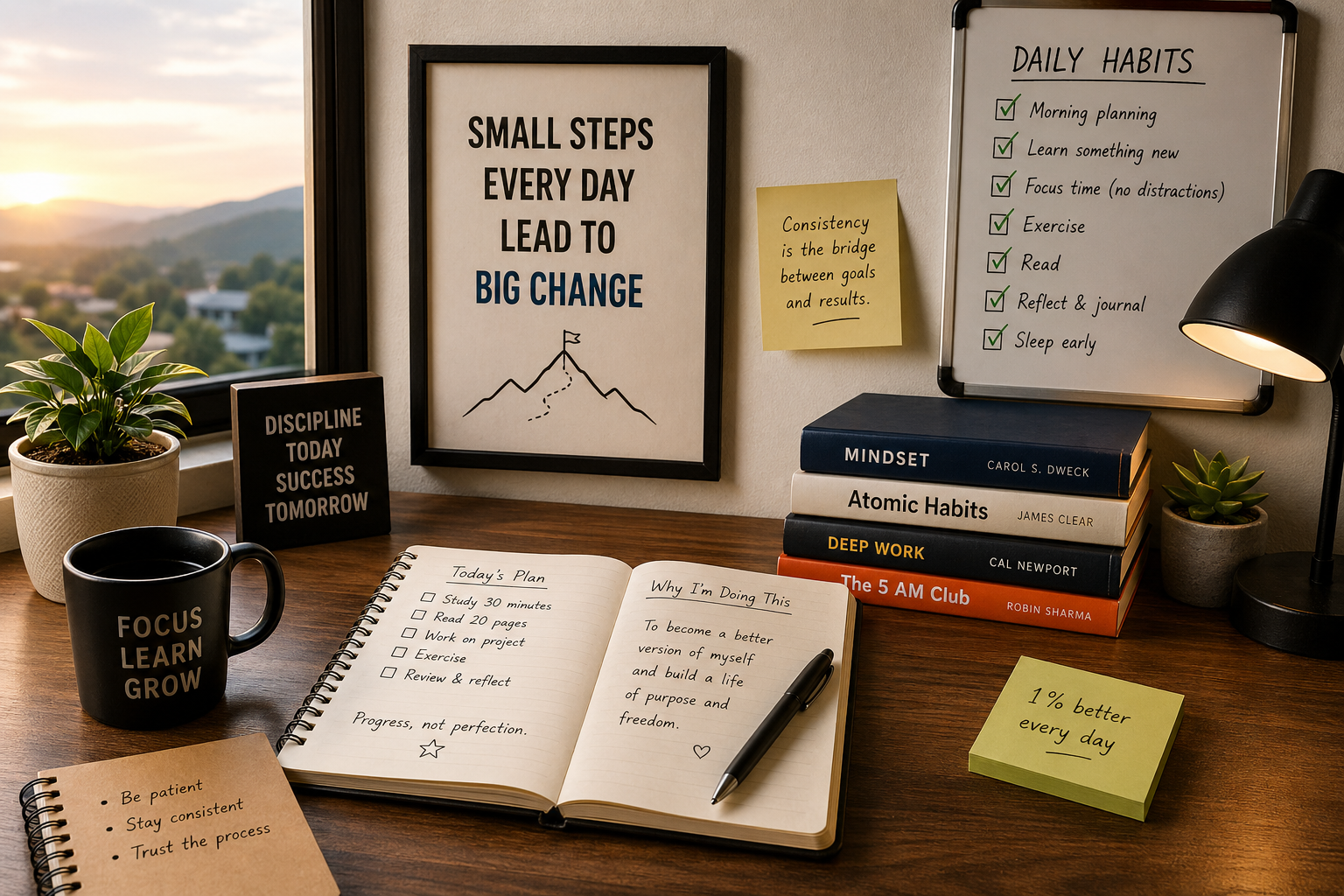
Self-improvement is often portrayed as a burst of motivation—a sudden decision to wake up earlier, learn new skills, or become more productive overnight. However, the truth is far less dramatic and far more practical: real growth is built on consistency. Without it, even the best intentions fade quickly, leaving behind unfinished goals and frustration.
In this article, we will explore how to build lasting consistency in your self-improvement journey, why it matters, and how you can sustain it over time without burnout.
Why Consistency Matters More Than Motivation
Motivation is powerful, but it is unreliable. It comes and goes depending on your mood, environment, and energy levels. Consistency, on the other hand, is a system—a set of habits and routines that keep you moving forward regardless of how you feel.
When you focus on consistency:
- You build momentum over time
- Small actions compound into significant results
- Progress becomes predictable rather than accidental
Think of self-improvement like exercising. One intense workout won’t change your body, but regular, consistent training will.
The Foundation: Start Small and Sustainable
One of the biggest mistakes people make is setting goals that are too ambitious at the start. While ambition is good, it often leads to burnout.
Instead:
- Start with small, manageable actions
- Focus on daily habits rather than big outcomes
- Make your routines easy to follow
For example, instead of saying “I will study 3 hours every day,” start with 20–30 minutes. Once the habit becomes natural, you can increase the duration.
Developing a Growth-Oriented Mindset
A key element of consistency is how you think about progress and failure. Many adults struggle with self-improvement because they expect quick results and get discouraged when progress is slow.
This is where a Growth Mindset for Adult Learners becomes essential. When you adopt this mindset, you begin to see:
- Mistakes as learning opportunities
- Slow progress as normal
- Challenges as necessary for growth
Instead of asking, “Why am I not good at this?” you start asking, “What can I learn from this?”
This shift in perspective makes it much easier to stay consistent, even when things get difficult.
Building Systems Instead of Relying on Willpower
Consistency is not about being disciplined all the time—it’s about reducing the need for discipline.
You can do this by creating systems:
- Set a fixed time for your habits (e.g., study every day at 7 PM)
- Prepare your environment (e.g., clean workspace, ready materials)
- Remove distractions (e.g., turn off notifications)
When your environment supports your goals, consistency becomes automatic rather than forced.
Tracking Progress to Stay Motivated
Even though motivation isn’t reliable, it still plays a role. One way to maintain it is by tracking your progress.
You can:
- Use a habit tracker
- Keep a journal
- Record weekly improvements
Seeing progress—even small wins—creates a sense of achievement that encourages you to continue.
How to Handle Setbacks Without Losing Momentum
No matter how consistent you are, setbacks will happen. You might miss a day, lose motivation, or feel overwhelmed.
The key is not to avoid failure, but to respond to it correctly:
- Don’t aim for perfection
- Avoid “all or nothing” thinking
- Focus on getting back on track quickly
Missing one day is not a problem. Missing a week because you feel guilty is.
Designing a Clear Direction for Long-Term Growth
Consistency becomes much easier when you know where you are going. Without direction, even the most disciplined efforts can feel meaningless.
That’s why it’s important to understand How to Create a Long-Term Learning Plan. A clear plan helps you:
- Define your goals
- Break them into smaller steps
- Measure your progress over time
When your daily actions are connected to a bigger purpose, it becomes easier to stay committed.
The Role of Routine in Daily Consistency
Routines are the backbone of consistency. They reduce decision fatigue and create a sense of stability in your day.
A simple daily routine might include:
- Morning reflection or planning
- Focused learning time
- Review of progress at night
The goal is not to create a perfect schedule, but a repeatable one.
Avoiding Burnout While Staying Consistent
Consistency does not mean pushing yourself endlessly. In fact, overworking is one of the fastest ways to lose consistency.
To avoid burnout:
- Take regular breaks
- Allow flexibility in your routine
- Prioritize rest and recovery
Remember, self-improvement is a long-term journey, not a short sprint.
Building Identity Through Consistency
The most powerful effect of consistency is identity change.
When you consistently take action, you begin to see yourself differently:
- You are no longer “someone trying to improve”
- You become “someone who is disciplined and committed”
This identity shift reinforces your habits, making consistency even easier over time.
Conclusion
Building consistency in self-improvement is not about perfection, motivation, or extreme effort. It is about showing up regularly, even in small ways, and trusting the process.
By starting small, developing the right mindset, creating supportive systems, and planning for the long term, you can turn self-improvement into a sustainable lifestyle.
In the end, success doesn’t come from what you do occasionally—it comes from what you do consistently.