How Long It Takes to Learn a Skill
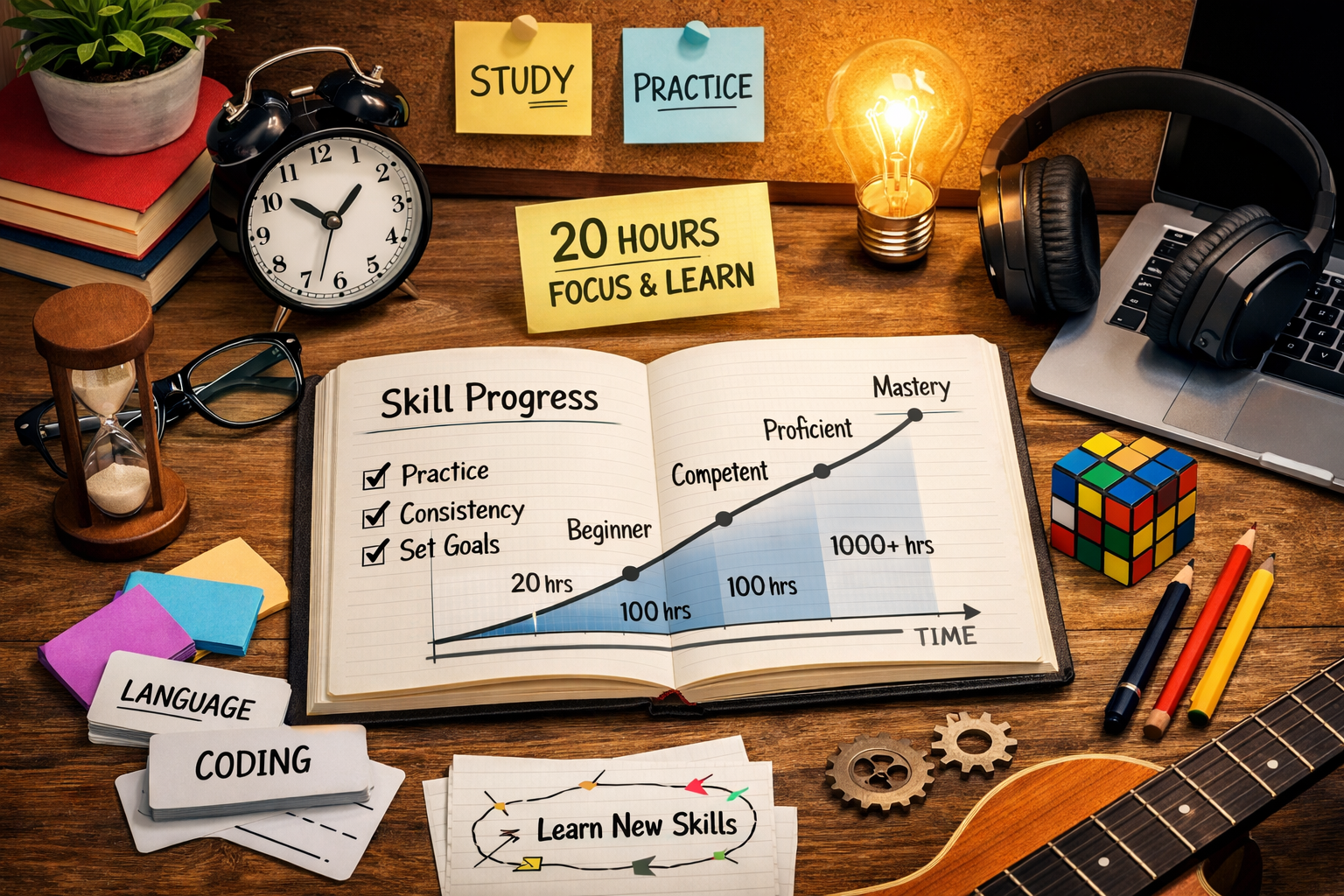
Learning a new skill is one of the most valuable investments you can make in yourself. Whether you’re trying to master a language, learn coding, play an instrument, or develop a professional expertise, one question always comes up: how long does it actually take to learn a skill?
The answer is not as simple as a fixed number of days or hours. Instead, it depends on multiple factors, including the complexity of the skill, your learning method, consistency, and personal motivation. In this article, we’ll explore what truly determines learning speed and how you can accelerate your progress effectively.
Understanding the Myth of “10,000 Hours”
One of the most popular ideas about skill mastery comes from the “10,000-hour rule,” popularized by Malcolm Gladwell. It suggests that mastering a skill requires around 10,000 hours of deliberate practice.
However, modern research has shown that this number is not universal. Some skills take far less time, while others may require more. More importantly, how you practice matters far more than how long you practice.
For example:
- Basic conversational skills in a new language can be achieved in a few months
- Intermediate programming skills may take 6–12 months
- Master-level expertise in complex fields can take years or even decades
So instead of focusing only on time, it’s better to think in terms of quality of learning.
The Four Stages of Skill Learning
Most skills follow a predictable learning curve:
1. The Beginner Stage (0–20 Hours)
At this stage, you are just getting familiar with the basics. The good news is that progress feels fast and exciting.
You can:
- Understand fundamental concepts
- Perform simple tasks
- Build initial confidence
This is often called the “rapid improvement phase.”
2. The Competence Stage (20–100 Hours)
Here, things start to get more challenging. You begin to notice mistakes and limitations.
During this phase:
- You develop consistency
- You improve accuracy
- You start solving problems independently
This is where many people quit because progress feels slower.
3. The Proficiency Stage (100–1,000 Hours)
At this level, your skills become more refined.
You can:
- Handle complex tasks
- Apply knowledge in real situations
- Adapt to new challenges
Progress is steady but requires patience.
4. The Mastery Stage (1,000+ Hours)
Mastery involves deep understanding and creativity.
At this stage:
- You innovate and create new approaches
- You teach others
- You perform at a high professional level
Not everyone needs to reach this level depending on their goals.
What Determines How Fast You Learn?
1. Complexity of the Skill
Simple skills like basic cooking or typing can be learned in weeks, while complex skills like surgery or advanced engineering take years.
2. Learning Method
Your approach makes a massive difference. Passive learning (watching videos without practice) is far less effective than active learning.
If you want to speed things up, you need structured methods like those found in How to Learn New Skills Quickly, which emphasize focused practice and feedback.
3. Practice Quality (Not Just Quantity)
Deliberate practice includes:
- Clear goals
- Immediate feedback
- Focus on weaknesses
Practicing without direction leads to slow progress.
4. Consistency Over Time
Learning a skill is not about cramming hours into a single day. Instead, it’s about showing up regularly.
This is where Building Consistency in Self-Improvement becomes essential. Daily effort, even in small amounts, compounds into significant progress over time.
5. Motivation and Mindset
Your mindset plays a huge role. People who believe they can improve tend to learn faster because they persist through challenges.
A growth mindset helps you:
- Embrace mistakes
- Stay motivated
- Continue learning despite setbacks
Realistic Timeframes for Learning Common Skills
Here are some rough estimates for different types of skills:
- Basic conversation in a language: 3–6 months
- Intermediate coding skills: 6–12 months
- Playing guitar (basic level): 3–6 months
- Professional-level design skills: 1–3 years
- Expert-level mastery: 5+ years
Remember, these are averages. Your journey may be faster or slower.
The Power of the First 20 Hours
Josh Kaufman, author of The First 20 Hours, argues that you can become reasonably good at a skill with just 20 hours of focused practice.
To maximize those first 20 hours:
- Break the skill into smaller parts
- Learn just enough theory to start
- Remove distractions
- Practice consistently
This approach helps you overcome the initial frustration barrier.
Why Most People Fail to Learn New Skills
Despite good intentions, many people give up. Here’s why:
- Unrealistic expectations
- Lack of consistency
- Fear of failure
- No clear learning plan
The key is to focus on progress, not perfection.
How to Learn Faster and More Efficiently
1. Set Clear Goals
Instead of saying “I want to learn coding,” say:
- “I want to build a simple website in 30 days.”
2. Use Active Learning
Engage with the material:
- Practice regularly
- Teach others
- Apply what you learn
3. Track Your Progress
Monitoring improvement keeps you motivated and focused.
4. Get Feedback
Feedback helps you correct mistakes early and improve faster.
5. Stay Consistent
Even 30–60 minutes a day is enough if done consistently.
The Truth About Learning Time
The truth is simple:
There is no universal timeline for learning a skill.
Instead of asking:
“How long will it take?”
A better question is:
“How can I learn effectively and consistently?”
Because with the right strategy, mindset, and discipline, you can dramatically shorten the time it takes to become skilled.
Conclusion
Learning a skill is not a race—it’s a journey shaped by effort, strategy, and persistence. While some skills can be learned in weeks and others take years, the most important factor is consistency.
If you focus on high-quality practice, stay committed, and use effective learning techniques, you will see steady progress over time. The timeline may vary, but the outcome is always worth it.