Books That Improve How You Learn
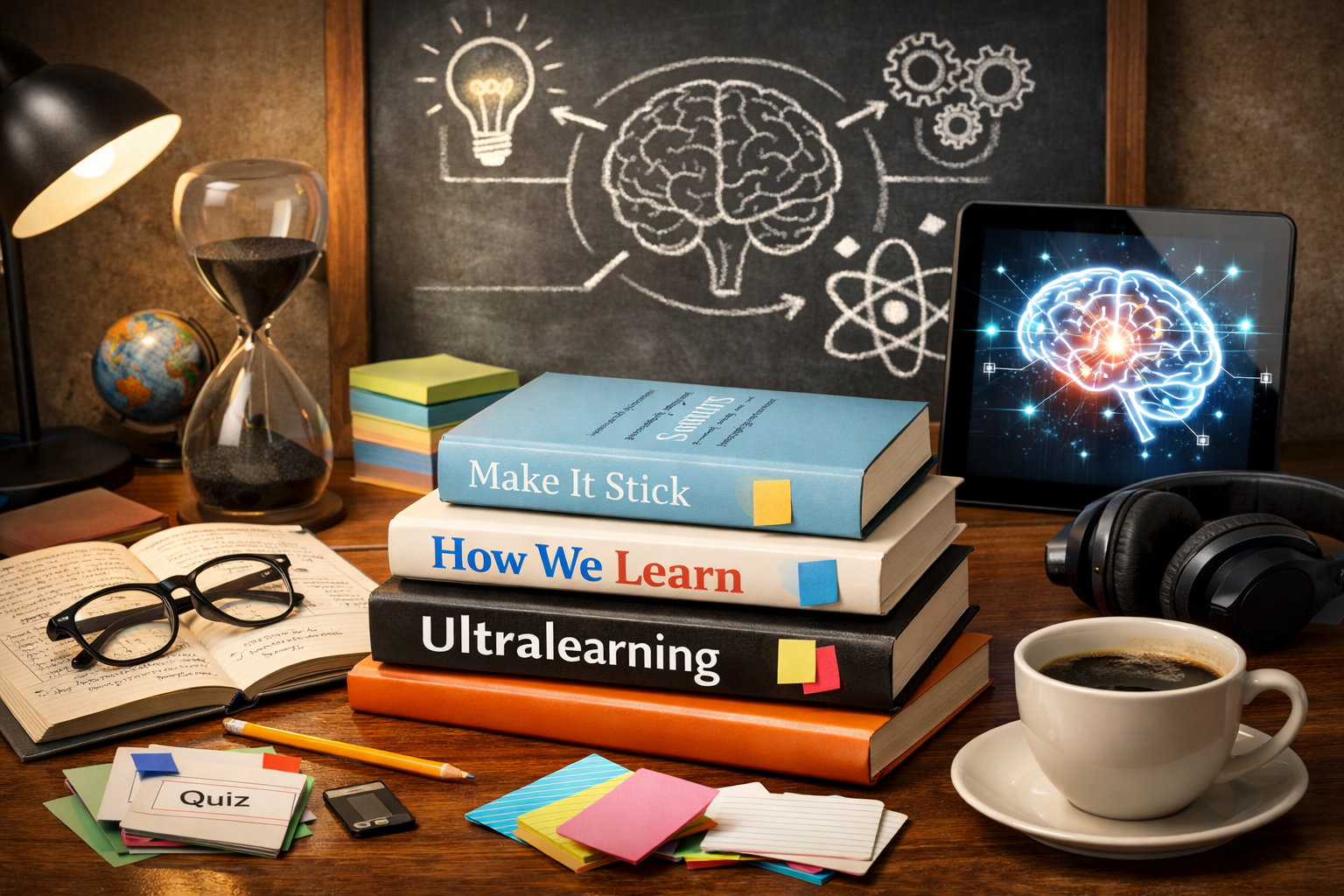
Learning is not just about effort—it’s about strategy. Many people spend years studying without realizing that how they learn matters far more than how long they study. Fortunately, a number of powerful books have explored the science of learning, offering practical techniques to help you absorb information faster, retain it longer, and apply it more effectively.
In this article, we’ll explore some of the most influential books that can transform the way you learn, along with key lessons you can apply immediately.
Why Learning How to Learn Matters
Before diving into the books, it’s important to understand why improving your learning process is essential. Traditional education often emphasizes memorization and repetition, but modern research shows that deeper understanding, spaced practice, and active engagement are far more effective.
If you’ve ever felt stuck despite studying hard, the issue might not be your intelligence—it could be your method. That’s why many experts recommend exploring resources like Best Learning Resources for Adults, which focus on optimizing the learning process rather than just increasing effort.
Top Books That Transform Learning
1. Make It Stick by Peter C. Brown
This book is one of the most recommended resources on effective learning. It challenges common myths, such as the idea that rereading or highlighting is enough.
Key lessons:
- Retrieval practice (testing yourself) is more effective than passive review
- Spaced repetition improves long-term memory
- Struggling during learning actually strengthens retention
The book emphasizes that learning should feel effortful—not easy—because difficulty often leads to deeper understanding.
2. How We Learn by Benedict Carey
Benedict Carey explores how the brain processes information and reveals surprising techniques to improve learning.
Key lessons:
- Studying in different environments improves recall
- Forgetting is part of the learning process
- Mixing topics (interleaving) enhances mastery
This book is especially helpful for those who want to align their study habits with How Adult Brains Actually Learn, giving insight into the biological and psychological mechanisms behind memory.
3. A Mind for Numbers by Barbara Oakley
Although focused on math and science, this book is really about learning difficult subjects.
Key lessons:
- Use focused and diffuse thinking modes
- Break problems into smaller chunks
- Avoid procrastination with structured habits
Oakley explains how the brain alternates between intense concentration and relaxed thinking, both of which are essential for mastering complex topics.
4. Ultralearning by Scott Young
Scott Young introduces a strategy for aggressive self-education, based on real-life projects and experiments.
Key lessons:
- Direct practice is more effective than passive learning
- Feedback is crucial for improvement
- Focus and intensity accelerate skill acquisition
This book is perfect for people who want to learn skills quickly and independently.
5. Limitless by Jim Kwik
Jim Kwik focuses on mental performance and brain optimization.
Key lessons:
- Improve memory using visualization techniques
- Boost focus by eliminating distractions
- Build a strong learning mindset
Kwik emphasizes that learning is not just about techniques but also about belief systems and habits.
Common Principles Across These Books
Despite different approaches, these books share several core principles:
Active Learning Beats Passive Learning
Simply reading or watching is not enough. You need to engage with the material—ask questions, solve problems, and test yourself.
Spacing Is Better Than Cramming
Studying over time is far more effective than last-minute cramming. Your brain needs time to consolidate information.
Mistakes Are Essential
Failure is not a sign of weakness—it’s part of the learning process. The more you struggle (productively), the stronger your understanding becomes.
Focus Matters More Than Time
One hour of deep, focused study is more valuable than several hours of distracted effort.
How to Apply These Lessons in Daily Life
Reading these books is only the first step. To truly benefit, you need to apply their ideas.
Build a Study System
Create a structured learning routine:
- Set clear goals
- Break topics into manageable chunks
- Schedule regular review sessions
Use Active Recall
Instead of rereading notes, try to recall information from memory. This strengthens neural connections and improves retention.
Practice Spaced Repetition
Review material at increasing intervals:
- Day 1
- Day 3
- Day 7
- Day 14
This method dramatically improves long-term memory.
Teach What You Learn
Explaining concepts to others forces you to understand them deeply. If you can teach it simply, you truly know it.
Choosing the Right Book for You
Not all books will suit everyone. Your choice depends on your goals:
- If you want scientific insights → Make It Stick
- If you prefer practical techniques → A Mind for Numbers
- If you want fast skill acquisition → Ultralearning
- If you want mindset and memory improvement → Limitless
The best approach is to start with one book and fully apply its lessons before moving on to another.
Final Thoughts
Improving how you learn is one of the most valuable investments you can make. The right books can completely change your approach to education, helping you learn faster, remember more, and achieve your goals more efficiently.
Instead of working harder, focus on working smarter. By applying the principles from these books, you’ll not only become a better learner—you’ll unlock your full potential.