A Beginner’s Guide to Lifelong Learning
In a world that changes faster every year, lifelong learning is no longer optional — it is essential. Technology evolves, industries shift, and new skills become valuable almost overnight. Those who continue learning thrive. Those who stop learning fall behind.
But lifelong learning is not about constantly enrolling in formal education. It is about cultivating curiosity, building systems for self-education, and developing the mindset to grow at every stage of life.
This beginner’s guide will help you understand what lifelong learning truly means, why it matters, and how to build a sustainable learning habit that lasts for decades.
What Is Lifelong Learning?
Lifelong learning is the continuous, voluntary pursuit of knowledge for personal or professional development.
It includes:
- Learning new career skills
- Developing hobbies
- Improving communication abilities
- Reading books regularly
- Exploring new ideas and perspectives
Unlike traditional education, lifelong learning is self-driven. You choose what to learn. You decide when and how to learn it.
And that autonomy makes it powerful.
Why Lifelong Learning Matters More Than Ever
1. The Job Market Is Constantly Changing
Automation, artificial intelligence, and digital transformation are reshaping industries. Skills that were valuable five years ago may become outdated.
Continuous learning protects your relevance.
2. Learning Strengthens Your Brain
Studies show that learning improves memory, cognitive flexibility, and problem-solving ability. It keeps your brain active and adaptable.
3. Personal Growth Builds Confidence
Every new skill increases your sense of competence. You become more resourceful, more adaptable, and more confident in handling change.
The Core Pillars of Lifelong Learning
To build a sustainable learning habit, focus on four core pillars:
1. Curiosity
Curiosity is the engine of growth. Ask questions. Explore unfamiliar topics. Follow your interests without judgment.
2. Consistency
Small daily learning sessions outperform occasional intense bursts. Fifteen focused minutes per day can transform your knowledge over time.
3. Reflection
Learning without reflection limits improvement. Regularly ask:
- What did I learn?
- What confused me?
- How can I apply this?
4. Application
Knowledge becomes valuable only when applied. Use what you learn in real life.
How to Start Your Lifelong Learning Journey
If you are new to self-directed learning, follow these steps:
Step 1: Define Your Direction
Ask yourself:
- What skills will benefit my career?
- What topics genuinely interest me?
- What problems do I want to solve better?
Start with one focus area.
Step 2: Break It Into Manageable Pieces
Avoid overwhelm. Divide large goals into small learning targets.
For example:
Instead of “learn digital marketing,” start with:
- Understanding SEO basics
- Learning content writing
- Practicing social media strategy
Small wins build momentum.
Step 3: Create a Learning System
You need structure, not just motivation.
A structured approach similar to The Complete Guide to Self-Learning can help you design:
- Clear learning objectives
- Reliable study routines
- Practical projects
- Feedback mechanisms
Structure turns intention into progress.
Developing the Right Mindset
The biggest barrier to lifelong learning is not intelligence. It is mindset.
Many adults believe:
- “I’m too old to learn this.”
- “I’m not naturally talented.”
- “I don’t have enough time.”
These beliefs slow growth more than any external obstacle.
To overcome them, cultivate a Growth Mindset for Adult Learners, which means:
- Believing abilities can improve through effort
- Viewing mistakes as feedback
- Seeing challenges as opportunities
- Persisting despite slow progress
Your mindset determines how far your learning journey will go.
Practical Strategies for Sustainable Learning
Here are proven strategies to maintain momentum:
1. Use Microlearning
Break learning into short sessions (20–30 minutes). This reduces mental fatigue and increases retention.
2. Learn Actively
Instead of just reading:
- Take notes
- Summarize in your own words
- Teach someone else
- Build small projects
Active learning strengthens memory.
3. Track Your Progress
Keep a learning journal or digital tracker. Seeing improvement increases motivation.
4. Surround Yourself With Learners
Join online communities, discussion groups, or local workshops. Environment influences consistency.
Overcoming Common Obstacles
“I Don’t Have Time”
Replace passive scrolling with focused learning. Even 15 minutes daily equals over 90 hours per year.
“I Lose Motivation”
Motivation fluctuates. Systems sustain progress. Schedule learning sessions like appointments.
“I Feel Overwhelmed”
Focus on one topic at a time. Depth beats scattered knowledge.
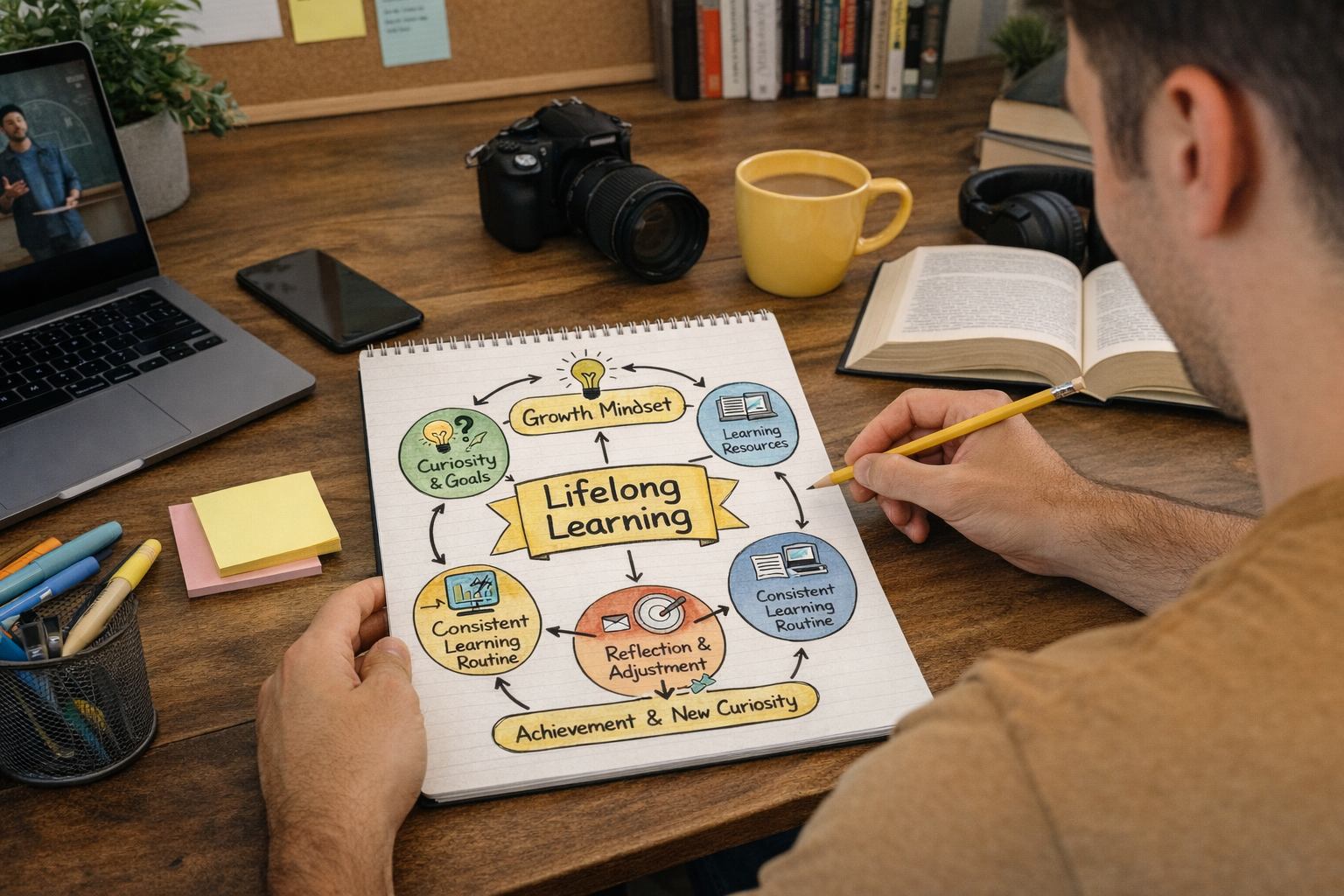
The Lifelong Learning Cycle
Lifelong learning is not linear. It is cyclical:
- Curiosity
- Learning
- Application
- Reflection
- Improvement
- New curiosity
Each cycle strengthens your skills and expands your perspective.
Building a 30-Day Lifelong Learning Habit
If you want to begin immediately, try this:
Week 1 – Exploration
- Choose one topic
- Gather resources
- Study fundamentals
Week 2 – Practice
- Apply what you learn
- Complete small exercises
Week 3 – Deepening
- Explore advanced concepts
- Identify weaknesses
Week 4 – Reflection
- Review what you’ve learned
- Adjust strategy
- Plan next topic
Thirty days of consistent effort can create a lasting habit.
Long-Term Benefits of Lifelong Learning
Over time, lifelong learners become:
- More adaptable
- Better problem-solvers
- More creative
- More resilient during change
- More confident in uncertainty
They do not fear change — they grow with it.
Final Thoughts
Lifelong learning is not about collecting certificates. It is about evolving continuously.
Start small. Stay consistent. Reflect often. Apply regularly.
The goal is not perfection. The goal is progress.
When you embrace learning as a lifelong journey rather than a temporary project, growth becomes part of who you are — not just something you do.