Learning Methods for Busy People
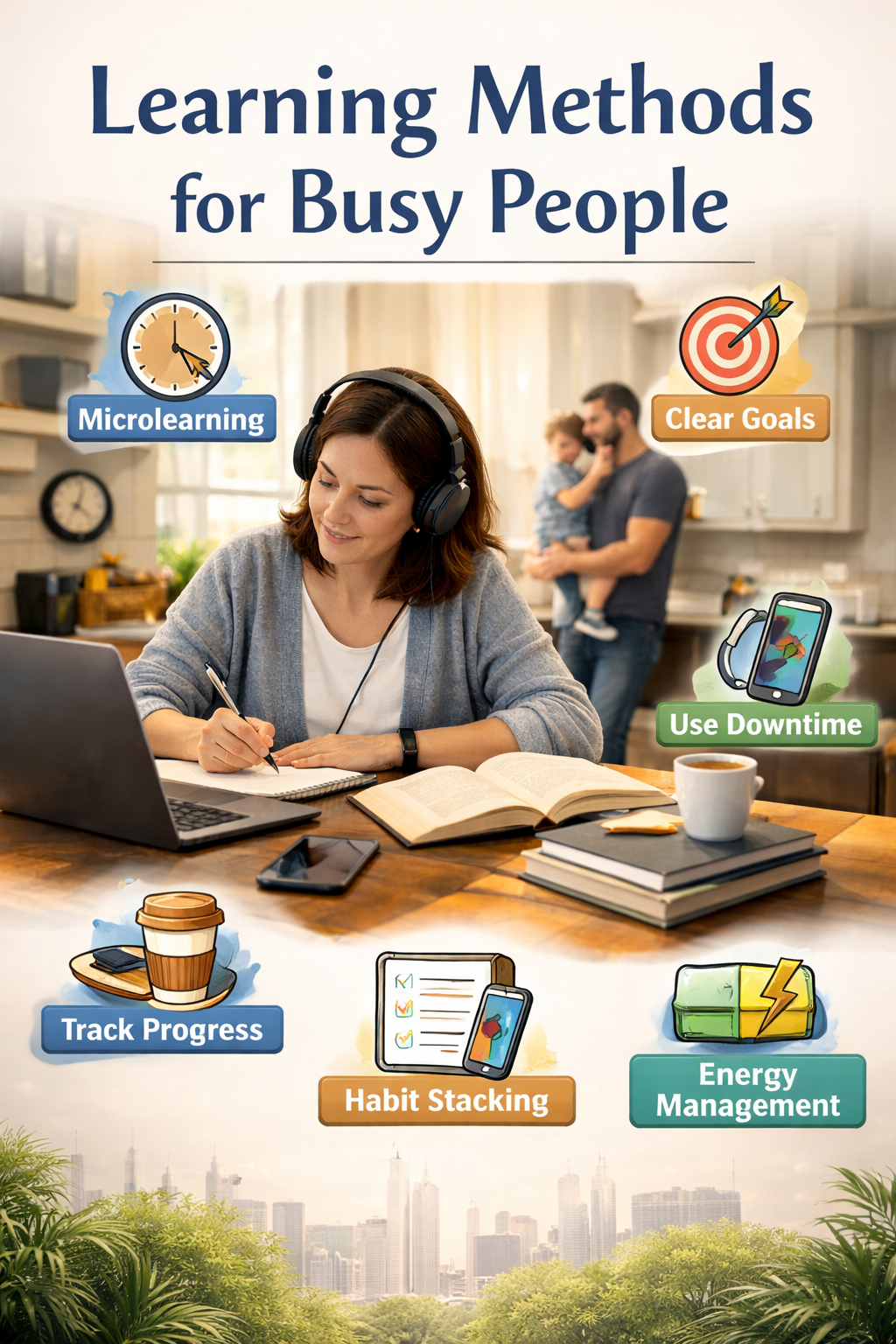
In today’s fast-paced world, being busy has become the norm. Between work responsibilities, family commitments, social obligations, and personal errands, finding time to learn something new can feel almost impossible. Yet continuous learning is no longer optional—it is essential for career growth, personal development, and long-term adaptability.
The good news? You don’t need hours of uninterrupted study time to make meaningful progress. With the right strategies, even the busiest people can build effective learning habits and see consistent improvement.
This guide will walk you through practical, realistic, and sustainable learning methods designed specifically for people with limited time.
Why Traditional Study Methods Don’t Work for Busy People
Traditional learning often assumes you have:
- Long blocks of quiet time
- Minimal distractions
- High mental energy
- A predictable schedule
Busy adults rarely have these advantages. Instead, they deal with interruptions, decision fatigue, and fluctuating motivation.
That’s why the key isn’t studying harder—it’s studying smarter.
1. Set Clear and Specific Learning Goals
Without clarity, learning becomes overwhelming.
Instead of saying:
“I want to learn marketing.”
Say:
“I want to understand Facebook Ads well enough to launch my first campaign in 30 days.”
Specific goals:
- Reduce decision fatigue
- Increase focus
- Make progress measurable
- Improve motivation
Break large goals into small weekly targets. Micro-progress builds momentum.
2. Use Microlearning (The 15-Minute Rule)
One of the most powerful methods for busy people is microlearning.
Microlearning means studying in short, focused bursts—usually 10–20 minutes.
Why it works:
- Fits into tight schedules
- Reduces mental resistance
- Improves retention
- Easier to repeat daily
You can learn during:
- Commutes
- Waiting times
- Lunch breaks
- Early mornings
- Before bed
Consistency beats intensity.
3. Stack Learning Into Existing Habits
If you try to “find time,” you may never start. Instead, attach learning to something you already do daily.
Examples:
- Listen to educational podcasts while driving
- Watch short lessons during meals
- Review flashcards before sleeping
- Read 5 pages after morning coffee
This technique removes the need for extra scheduling. Learning becomes automatic.
4. Focus on High-Impact Learning
Busy people cannot afford inefficient methods.
Instead of passively consuming information:
- Take notes
- Summarize what you learned
- Teach someone else
- Apply knowledge immediately
If you’ve ever wondered How to Learn Faster as an Adult, the answer often lies in active learning rather than passive reading.
The faster you apply what you learn, the faster it sticks.
5. Plan Weekly Learning Blocks (Not Daily Perfection)
Daily perfection is unrealistic for busy schedules.
Instead:
- Set a weekly learning target (e.g., 2 hours total)
- Distribute it flexibly
- Adjust when needed
Missed Monday? Study Wednesday.
Busy Friday? Double up Sunday.
Flexibility prevents guilt. Guilt kills consistency.
6. Reduce Decision Fatigue
Busy people make hundreds of decisions daily. Don’t waste energy deciding how to study.
Prepare in advance:
- Choose one course at a time
- Decide your study time in advance
- Keep materials ready
- Use one main resource
Fewer decisions = more action.
7. Learn in Sprints, Not Marathons
Trying to study for three hours after a long workday is unrealistic.
Instead:
- Use 20–30 minute focused sessions
- Take 5-minute breaks
- Stop before exhaustion
Short sessions maintain quality and reduce burnout.
8. Protect Energy, Not Just Time
Time matters. But energy matters more.
If you’re mentally drained at night, study in the morning.
If mornings are chaotic, try midday breaks.
Track when you feel:
- Most focused
- Least distracted
- Most motivated
Schedule learning during high-energy windows.
9. Balance Learning With Real Life
Learning should enhance your life, not compete with it.
Many busy adults struggle with How to Balance Learning and Daily Life because they treat learning as an additional burden instead of an integrated habit.
Here’s how to balance effectively:
- Communicate your goals with family
- Set realistic expectations
- Avoid overcommitting
- Rest without guilt
- Schedule downtime
Sustainable learning beats extreme bursts followed by burnout.
10. Use Accountability Systems
Motivation fades. Systems don’t.
Try:
- Study partners
- Online communities
- Public progress tracking
- Weekly self-reviews
Even a simple checklist increases follow-through.
11. Track Small Wins
Progress fuels motivation.
Instead of focusing on what’s left, track:
- Hours studied
- Lessons completed
- Skills practiced
- Concepts mastered
Seeing growth keeps momentum alive.
12. Apply the 80/20 Principle
Not all knowledge is equally valuable.
Focus on:
- Core fundamentals
- Practical applications
- Skills with immediate impact
Avoid perfectionism. Master the critical 20% that gives 80% of results.
13. Accept Imperfection
Busy people miss study days.
Schedules change.
Energy fluctuates.
The key is returning quickly—not quitting.
Consistency over months matters more than perfection in weeks.
Sample Weekly Plan for Busy Learners
Monday: 15 minutes review
Tuesday: 20 minutes lesson
Wednesday: Break
Thursday: 20 minutes practice
Friday: 15 minutes recap
Weekend: 45 minutes deep focus
Total: 1 hour 55 minutes
That’s nearly 100 hours per year.
Small efforts compound dramatically.
Final Thoughts
You don’t need a perfect schedule.
You don’t need unlimited time.
You don’t need ideal conditions.
You need:
- Clear goals
- Short sessions
- Consistency
- Smart prioritization
- Sustainable balance
Learning as a busy person is not about finding more hours—it’s about using the hours you already have more effectively.
Even 15 focused minutes a day can transform your skills, confidence, and career over time.
The question isn’t whether you’re too busy to learn.
It’s whether you’re ready to start small—and stay consistent.