Skill Stacking for Beginners
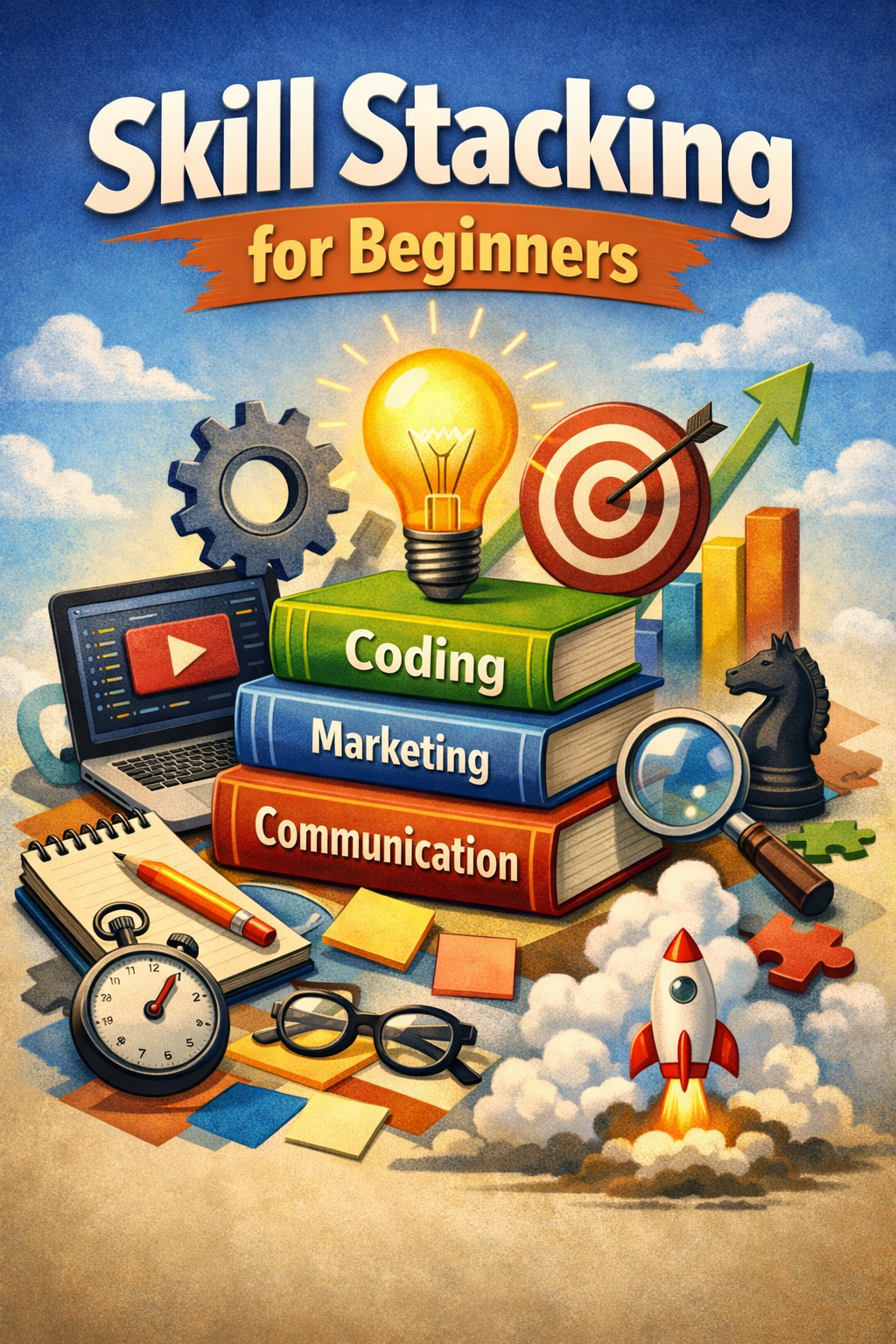
In today’s fast-changing world, mastering a single skill is often not enough to stay competitive. Many successful professionals don’t rely on one expertise alone—they combine multiple complementary abilities to create a powerful advantage. This concept is known as skill stacking.
For beginners, skill stacking can feel overwhelming at first. You might wonder which skills to learn, how to combine them, and how to make steady progress without burning out. The good news is that anyone can start building a skill stack with the right strategy.
This guide will walk you through the fundamentals of skill stacking, why it works, and how beginners can start building a valuable set of skills step by step.
What Is Skill Stacking?
Skill stacking is the practice of combining multiple useful skills to create a unique and valuable capability.
Instead of becoming the absolute best in one narrow field, you become very good at several complementary skills. When these skills work together, they create opportunities that might not exist if you focused on only one area.
For example:
- A graphic designer who also understands marketing
- A programmer who can communicate clearly with clients
- A writer who knows search engine optimization (SEO)
- A marketer who can analyze data
Each individual skill may not be world-class, but together they create a powerful combination.
This approach is especially valuable for beginners because becoming the top expert in a single field can take decades, while building a practical stack of skills can happen much faster.
Why Skill Stacking Is Powerful
1. It Makes You Unique
Millions of people may share a single skill. But the combination of your skills can be rare.
For instance:
- Writing + marketing + psychology
- Programming + design + business strategy
- Video editing + storytelling + social media
When skills intersect, you create a niche where competition is smaller.
2. It Increases Career Opportunities
Employers increasingly value people who can do multiple things well.
Someone who can:
- Analyze data
- Present insights clearly
- And communicate with teams
is often more valuable than someone who can only perform one of those tasks.
Skill stacking makes you adaptable, which is critical in a rapidly evolving job market.
3. It Helps You Solve Bigger Problems
Complex problems usually require multiple abilities. A stacked skill set allows you to see problems from different perspectives and find creative solutions.
For example:
- A developer with product design knowledge builds better user experiences.
- A marketer who understands analytics makes better decisions.
- A teacher with storytelling skills creates more engaging lessons.
The Beginner’s Mindset for Skill Stacking
Before choosing your skills, it’s important to develop the right mindset.
Focus on Progress, Not Perfection
Beginners often feel discouraged because they compare themselves to experts. But skill stacking is about steady improvement, not immediate mastery.
Your goal is to become:
- Competent in several areas
- Strategic in combining them
Not perfect in every skill.
Stay Curious
Skill stacking rewards curiosity. People who explore new ideas, industries, and tools often discover unexpected combinations.
Curiosity leads to connections between skills.
Think Long Term
A strong skill stack doesn’t appear overnight. It grows gradually as you add new capabilities and refine existing ones.
The key is consistent learning over time.
Choosing Your First Skills
Beginners often struggle with one question:
Which skills should I stack?
The best approach is to start with three categories.
1. A Core Skill
Your core skill is the main ability you want to develop.
Examples:
- Programming
- Writing
- Graphic design
- Marketing
- Data analysis
This skill becomes the foundation of your stack.
2. A Supporting Skill
Supporting skills enhance your core ability.
For example:
| Core Skill | Supporting Skill |
|---|---|
| Writing | SEO |
| Programming | UX design |
| Marketing | Data analytics |
| Graphic design | Branding |
Supporting skills make your main skill more effective.
3. A Communication Skill
Communication skills amplify everything else.
Examples include:
- Public speaking
- Teaching
- Storytelling
- Persuasive writing
People who can explain ideas clearly often gain more influence and opportunities.
Example Skill Stacks for Beginners
Here are some practical examples of beginner-friendly stacks.
Content Creator Stack
- Writing
- SEO
- Social media marketing
- Basic graphic design
This combination allows someone to produce and promote content effectively.
Tech Professional Stack
- Programming
- Problem-solving
- Communication
- Product thinking
This stack makes someone valuable not only as a developer but also as a collaborator.
Entrepreneur Stack
- Marketing
- Sales
- Financial literacy
- Leadership
Entrepreneurs often rely heavily on skill stacking because they must handle many responsibilities.
The Learning Strategy Behind Skill Stacking
Learning multiple skills at once can feel overwhelming. The key is to follow a structured approach.
One effective way is to focus on systems that teach How to Learn New Skills Quickly, which emphasizes efficient practice, experimentation, and consistent feedback.
Instead of trying to master everything immediately, break each skill into smaller components and practice them regularly.
Learning Skills as an Adult
Many beginners worry that learning becomes harder with age. While adults may have less free time than students, they also have advantages.
Adults often:
- Understand their goals better
- Have stronger discipline
- Learn with real-world context
In fact, many people improve their abilities by focusing on strategies described in How to Learn Faster as an Adult, which highlight practical learning techniques like deliberate practice, spaced repetition, and focused study sessions.
Building Skills Without Burnout
Skill stacking should improve your life—not exhaust you.
Here are strategies to maintain balance.
Learn in Small Sessions
Short learning sessions are often more effective than long ones.
Try:
- 30–45 minute study blocks
- Focused practice sessions
- Clear daily goals
Consistency beats intensity.
Alternate Skills
Instead of studying the same skill every day, rotate between them.
Example weekly structure:
- Monday: Core skill
- Tuesday: Supporting skill
- Wednesday: Core skill
- Thursday: Communication skill
- Friday: Review and practice
This prevents boredom and keeps learning fresh.
Apply What You Learn
The fastest way to strengthen a skill is to use it in real situations.
Examples:
- Write blog posts to improve writing
- Build small apps to learn programming
- Create designs for real projects
Application turns knowledge into experience.
The Compounding Effect of Skill Stacking
Skill stacking becomes more powerful over time because skills compound.
For example:
- Writing improves marketing.
- Marketing improves sales.
- Sales improves business success.
Each new skill multiplies the value of the others.
This compounding effect is why many highly successful people rely on diverse skill sets rather than a single specialization.
Mistakes Beginners Should Avoid
While skill stacking is powerful, beginners often make common mistakes.
Learning Too Many Skills at Once
Trying to learn five or six skills simultaneously leads to confusion and slow progress.
A better approach is:
- Focus on one core skill
- Add a supporting skill
- Gradually expand your stack
Ignoring Practical Use
Learning theory without practice limits growth.
Skills improve faster when applied to:
- projects
- real problems
- collaborations
Quitting Too Early
Many skills feel difficult at the beginning. The early phase often includes frustration and slow improvement.
Consistency is the key to pushing past this stage.
A Simple Skill Stacking Plan for Beginners
If you’re starting from scratch, this simple plan works well.
Step 1: Choose One Core Skill
Pick something that aligns with your interests or career goals.
Step 2: Learn the Fundamentals
Spend the first few weeks understanding the basics.
Avoid jumping to advanced topics too early.
Step 3: Add a Complementary Skill
Choose a second skill that enhances the first one.
Step 4: Practice Through Projects
Create small projects where both skills work together.
Step 5: Add a Third Skill Later
After building confidence, introduce another complementary skill.
Over time, your stack becomes stronger and more unique.
The Long-Term Advantage of Skill Stacking
Skill stacking is not just about learning multiple abilities—it’s about creating a unique professional identity.
People with strong skill stacks often:
- Solve problems creatively
- Adapt quickly to change
- Stand out in competitive fields
Instead of competing with millions of specialists, they operate at the intersection of several valuable skills.
Final Thoughts
Skill stacking is one of the most effective strategies for beginners who want to grow professionally and personally.
You don’t need to be the best in the world at a single skill. Instead, focus on building a powerful combination of abilities that work together.
Start small, stay consistent, and keep learning. Over time, each new skill adds another layer of value to your stack.
The result is a unique set of capabilities that can open doors to opportunities, creativity, and long-term success.