How to Create a Long-Term Learning Plan
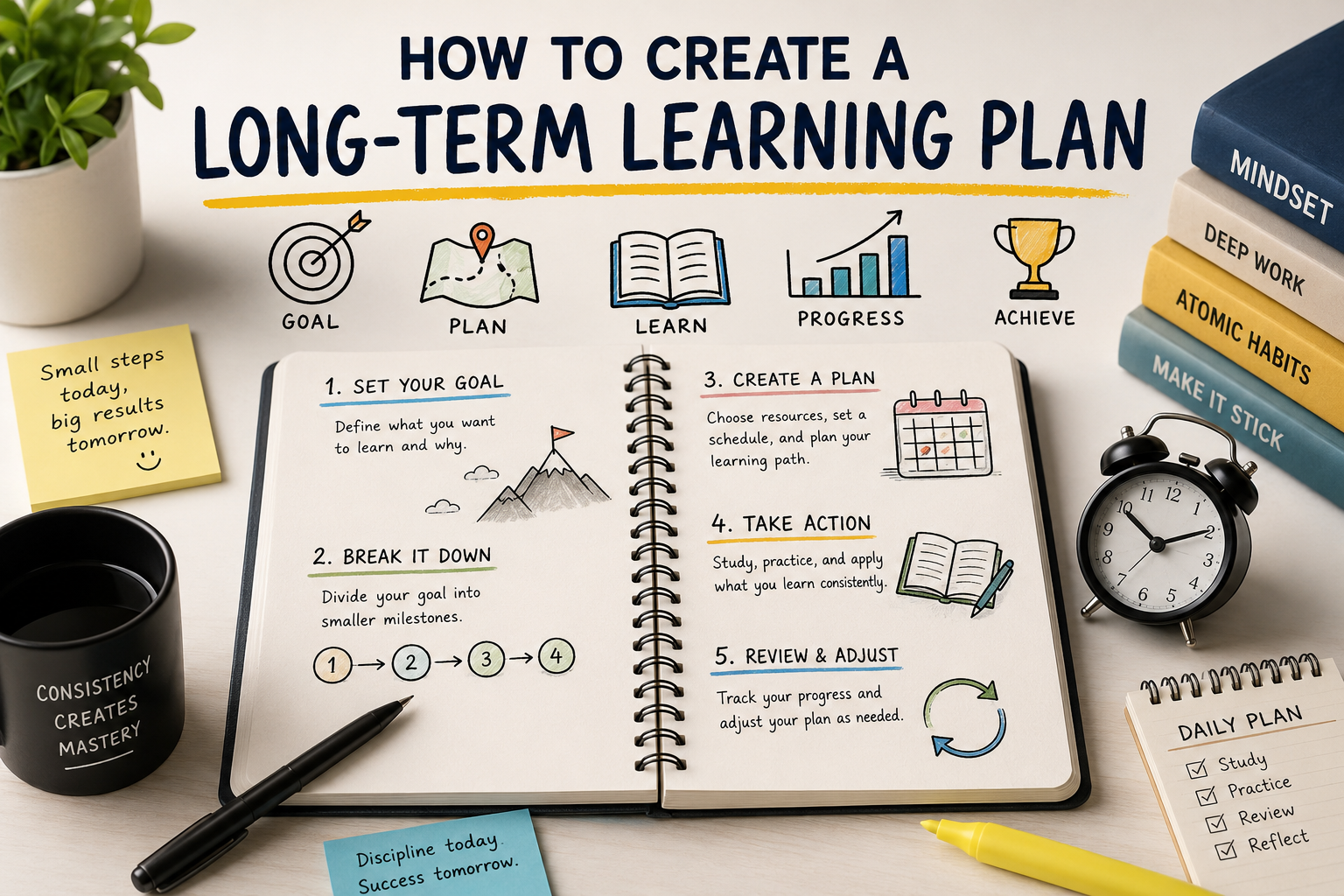
Learning is no longer limited to classrooms or formal education. In today’s rapidly changing world, the ability to continuously acquire new knowledge and skills has become one of the most valuable assets anyone can possess. Whether you want to master a new language, develop technical expertise, improve your career prospects, or simply pursue personal growth, having a structured learning plan can make the difference between success and frustration.
Many people start learning with enthusiasm but eventually lose motivation because they lack direction. A long-term learning plan provides a roadmap that keeps you focused, organized, and motivated throughout your educational journey.
This comprehensive guide will help you understand how to create a sustainable learning plan that supports continuous growth and lasting success.
Why a Long-Term Learning Plan Matters
Learning without a plan is similar to traveling without a map. You may eventually reach your destination, but the journey will likely be inefficient and confusing.
A long-term learning plan offers several benefits:
- Creates clear direction and purpose
- Helps prioritize important skills
- Reduces overwhelm
- Improves time management
- Increases motivation through measurable progress
- Encourages consistent habits
- Makes it easier to adapt to changing goals
Instead of jumping from one course or tutorial to another, you build knowledge systematically and retain information more effectively.
Define Your Ultimate Learning Goal
Before creating a learning plan, identify what you want to accomplish.
Ask yourself questions such as:
- What skills do I want to have in three years?
- Why do I want to learn this subject?
- How will this knowledge improve my life or career?
- What level of mastery am I aiming for?
Your goal should be both ambitious and realistic.
For example:
Instead of saying:
“I want to learn programming.”
Create a more specific objective:
“I want to become a professional full-stack web developer capable of building commercial applications within three years.”
Having a clearly defined destination makes planning much easier.
Break Large Goals into Smaller Milestones
Long-term objectives often feel intimidating because they appear too large.
The solution is to divide them into smaller milestones.
Example:
Year 1
- Learn programming fundamentals
- Understand HTML, CSS, and JavaScript
- Build five simple projects
Year 2
- Learn backend development
- Work with databases
- Create full-stack applications
Year 3
- Master advanced concepts
- Build a professional portfolio
- Apply for freelance or full-time opportunities
Each milestone becomes an achievable target that keeps motivation high.
Assess Your Current Knowledge
Understanding your starting point prevents unnecessary repetition and identifies knowledge gaps.
Evaluate:
- Existing skills
- Previous experience
- Available resources
- Time commitment
- Learning strengths
- Learning weaknesses
Being honest during this assessment allows you to create a realistic roadmap rather than an overly ambitious one.
Create SMART Learning Objectives
Every milestone should follow the SMART framework.
Your objectives should be:
Specific
Clearly define what you want to learn.
Measurable
Track your progress using quizzes, projects, or completed lessons.
Achievable
Choose goals that challenge you without becoming impossible.
Relevant
Ensure each objective contributes to your larger vision.
Time-Bound
Set deadlines that encourage consistent progress.
For example:
“Complete an intermediate Python course and build three automation projects within three months.”
Organize Learning into Phases
Effective learning follows a logical progression.
Phase 1: Foundation
Focus on basic concepts and terminology.
Activities may include:
- Reading introductory books
- Watching beginner tutorials
- Taking notes
- Learning vocabulary
Phase 2: Practice
Apply knowledge immediately.
Examples include:
- Coding projects
- Writing essays
- Solving exercises
- Creating presentations
Practical application strengthens memory and develops confidence.
Phase 3: Mastery
Challenge yourself with advanced tasks.
This stage includes:
- Complex projects
- Real-world applications
- Teaching others
- Participating in communities
- Solving unfamiliar problems
Mastery develops through repetition and continuous improvement rather than passive consumption.
Build a Weekly Learning Schedule
Consistency is more important than intensity.
Instead of studying for eight hours once a week, study one hour every day.
Example schedule:
Monday
Read new material
Tuesday
Watch educational videos
Wednesday
Complete exercises
Thursday
Review notes
Friday
Practice projects
Saturday
Take quizzes
Sunday
Reflect and plan the following week
A balanced schedule reduces burnout while maintaining steady progress.
Use Multiple Learning Resources
Relying on only one source limits understanding.
Consider combining:
- Books
- Online courses
- Podcasts
- Educational videos
- Research papers
- Blogs
- Discussion forums
- Practice platforms
Different perspectives reinforce concepts and expose you to new ideas.
For those beginning independent education, The Complete Guide to Self-Learning provides an excellent foundation for understanding how to study efficiently outside traditional classrooms.
Track Your Progress
Monitoring progress helps maintain motivation.
Methods include:
- Learning journals
- Digital note-taking applications
- Habit trackers
- Progress spreadsheets
- Monthly reviews
- Portfolio updates
Seeing tangible improvement reinforces commitment and highlights areas requiring additional attention.
Review and Adjust Your Plan
No learning plan should remain static.
Every month, evaluate:
- What worked well?
- Which topics were difficult?
- Are deadlines realistic?
- Has your goal changed?
- Do you need additional resources?
Small adjustments prevent frustration and keep your plan aligned with your evolving objectives.
Develop Effective Learning Habits
Long-term success depends more on habits than motivation.
Useful habits include:
- Studying at the same time each day
- Eliminating distractions
- Taking organized notes
- Reviewing material regularly
- Completing practical exercises
- Reflecting after each learning session
Habits reduce decision fatigue and make learning automatic.
Embrace Active Learning
Passive reading often leads to poor retention.
Instead, engage with the material by:
- Asking questions
- Explaining concepts aloud
- Teaching friends
- Building projects
- Solving real problems
- Creating summaries from memory
Active participation dramatically improves understanding and recall.
Balance Depth and Breadth
Some learners consume endless content without mastering anything.
Others become trapped studying a single topic forever.
An effective long-term plan balances:
Breadth
Understanding related subjects and gaining context.
Depth
Developing expertise through focused practice.
Together, these approaches create well-rounded knowledge and practical competence.
Overcome Learning Plateaus
Every learner experiences periods where progress appears slow.
Common solutions include:
- Trying different learning methods
- Working on practical projects
- Taking short breaks
- Reviewing fundamentals
- Seeking feedback
- Joining study groups
Plateaus are a natural part of skill development and often precede significant improvement.
Stay Motivated Throughout the Journey
Long-term learning requires sustained motivation.
Helpful strategies include:
- Celebrating small victories
- Tracking completed milestones
- Rewarding consistency
- Visualizing long-term goals
- Connecting learning with personal interests
Remember that progress is rarely linear. Some weeks will be highly productive, while others may feel challenging. Persistence is what ultimately leads to mastery.
Many successful lifelong learners also focus on Building Consistency in Self-Improvement, recognizing that daily discipline often produces better results than occasional bursts of motivation.
Common Mistakes to Avoid
Many learners unintentionally slow their progress by making avoidable mistakes.
These include:
- Setting unrealistic expectations
- Consuming information without practicing
- Constantly switching topics
- Comparing progress with others
- Ignoring review sessions
- Pursuing perfection instead of steady improvement
Avoiding these pitfalls creates a more sustainable and enjoyable learning experience.
Measuring Long-Term Success
Success should not be measured solely by certificates or completed courses.
Consider evaluating yourself based on:
- Skills you can demonstrate
- Problems you can solve
- Projects you have completed
- Confidence in applying knowledge
- Ability to teach others
- Continuous personal growth
Real learning becomes visible through action rather than accumulated information.
Conclusion
Creating a long-term learning plan is one of the most effective ways to transform curiosity into lasting expertise. By defining clear goals, breaking them into manageable milestones, establishing consistent routines, and regularly reviewing your progress, you create a system that supports continuous improvement for years to come.
The journey of lifelong learning is not about moving as quickly as possible but about maintaining steady momentum. Small, consistent efforts compound over time, leading to remarkable achievements that once seemed impossible. With a well-designed learning plan and a commitment to continuous growth, anyone can develop new skills, expand their knowledge, and unlock opportunities for personal and professional success.