How to Stay Motivated to Learn
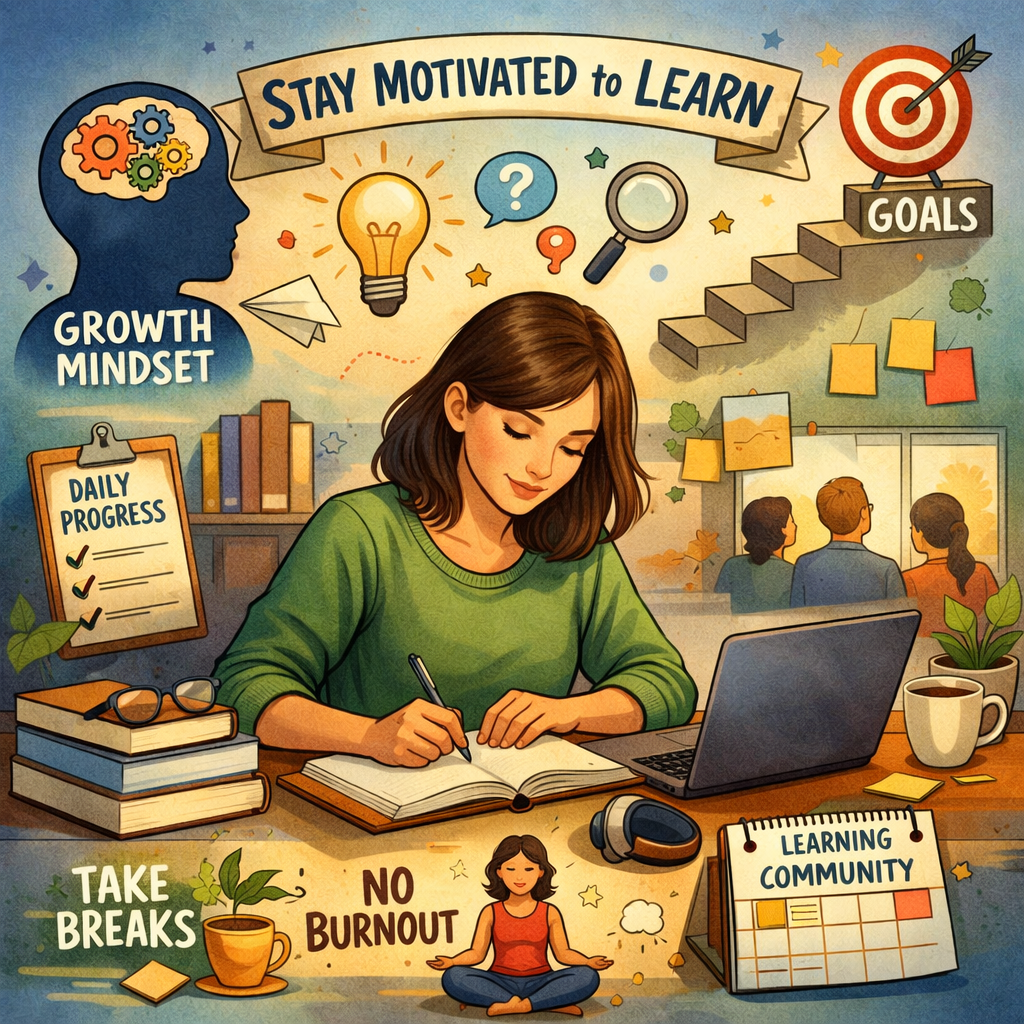
Learning something new is exciting at first. You buy books, watch tutorials, and imagine the results you want to achieve. But after a few weeks, motivation often fades. Work becomes busy, progress feels slow, and learning starts to feel like a burden instead of an opportunity.
This is a common experience for many adult learners. Unlike students in school, adults must balance learning with careers, responsibilities, and personal life. The key to long-term success is not simply intelligence or talent—it is the ability to maintain motivation over time.
In this guide, we will explore practical strategies to help you stay motivated to learn, build consistent habits, and turn learning into a sustainable part of your life.
Why Motivation Fades When Learning
Before learning how to stay motivated, it helps to understand why motivation disappears in the first place.
1. Progress Feels Slow
Learning complex skills takes time. When you cannot see immediate results, it becomes easy to lose enthusiasm.
For example, learning programming, a new language, or advanced mathematics may require months of effort before noticeable improvement appears.
2. Life Gets Busy
Adult learners often juggle many responsibilities:
- Work deadlines
- Family obligations
- Social commitments
- Personal health
Because of this, learning can quickly move to the bottom of the priority list.
3. Overwhelming Learning Goals
Many people try to learn too much at once. They create unrealistic expectations and eventually feel discouraged when they cannot keep up.
4. Lack of Structure
Without a clear plan or system, learning becomes inconsistent. You may study intensely one week and completely stop the next.
Understanding these challenges allows you to design better strategies that keep motivation alive.
Start With a Clear Learning Purpose
Motivation grows stronger when your learning has meaning.
Instead of learning something simply because it seems useful, connect it to a deeper goal.
Ask yourself:
- Why do I want to learn this skill?
- How will this knowledge improve my life?
- What opportunities will it open in the future?
For example:
Weak motivation:
“I want to learn data analysis because it’s popular.”
Strong motivation:
“I want to learn data analysis so I can change careers and work remotely.”
When your purpose is clear, learning becomes easier to sustain during difficult moments.
Break Big Goals Into Small Milestones
Large goals can feel overwhelming. Breaking them into smaller steps helps maintain motivation.
Instead of saying:
“I want to become fluent in Spanish.”
Try structuring goals like this:
Week 1–2:
- Learn basic greetings
- Memorize 50 common words
Week 3–4:
- Understand basic grammar
- Practice short conversations
Month 2:
- Watch simple videos in Spanish
- Start reading short articles
Each small achievement provides a sense of progress. This feeling of accomplishment fuels motivation and encourages you to continue learning.
Build a Consistent Learning Habit
Motivation is unreliable. Habits are dependable.
Instead of relying on inspiration, create a regular learning routine.
For example:
- Study 20 minutes every morning
- Read one article during lunch
- Watch a tutorial before bed
Consistency matters more than intensity. Learning for 20 minutes every day is often more effective than studying for five hours once a week.
Over time, this routine becomes automatic, making learning feel natural rather than forced.
Track Your Progress
One of the most powerful ways to stay motivated is to see evidence of improvement.
Tracking progress helps you recognize how far you have come.
You can track learning in several ways:
Learning Journals
Write down what you study each day. Over time, you will see a record of your effort and growth.
Skill Checklists
Create a checklist of topics or abilities you want to master and mark them as you complete them.
Monthly Reviews
Every month, reflect on:
- What you learned
- What challenges you faced
- What skills improved
Seeing visible progress keeps motivation alive even when learning feels difficult.
Make Learning Enjoyable
If learning feels like punishment, motivation will disappear quickly.
Try to make learning engaging and enjoyable.
Ways to do this include:
- Watching educational videos
- Listening to podcasts
- Using interactive learning platforms
- Joining learning communities
When learning becomes interesting, you are more likely to continue.
Enjoyment transforms learning from an obligation into a personal adventure.
Focus on Curiosity Instead of Pressure
Many people approach learning with pressure.
They think:
- “I must master this quickly.”
- “I should already understand this.”
- “I’m falling behind.”
This mindset creates stress and reduces motivation.
Instead, approach learning with curiosity.
Ask questions like:
- “How does this work?”
- “Why is this concept important?”
- “What happens if I try this differently?”
Curiosity encourages exploration and creativity. When learning feels like discovery rather than obligation, motivation naturally increases.
Use the Right Learning Mindset
Your mindset plays a huge role in motivation.
Many learners quit because they believe intelligence is fixed. When something feels difficult, they assume they simply are not good at it.
However, research shows that abilities grow with practice and persistence.
Developing a Growth Mindset for Adult Learners helps you see challenges as opportunities instead of obstacles. Instead of saying “I’m not good at this,” you begin thinking “I’m still learning this.”
This subtle shift can dramatically increase motivation and resilience.
Avoid Burnout While Learning
One of the biggest threats to motivation is burnout.
Burnout happens when you push yourself too hard without enough rest or balance.
Signs of learning burnout include:
- Feeling mentally exhausted
- Losing interest in the subject
- Procrastinating frequently
- Feeling frustrated with slow progress
To avoid this, remember that learning should be sustainable.
Take breaks, rotate subjects, and allow yourself time to recover. Understanding strategies like How to Learn Independently Without Burnout can help maintain long-term motivation while protecting your mental energy.
Create a Learning Environment That Supports Focus
Your environment can either support or sabotage your motivation.
A good learning environment should be:
- Quiet
- Comfortable
- Free from distractions
- Organized
Small improvements can make a big difference.
For example:
- Turn off phone notifications
- Use website blockers during study sessions
- Keep learning materials ready and accessible
When your environment supports focus, learning becomes easier and more productive.
Surround Yourself With Learners
Motivation grows when you are surrounded by people who value learning.
You can find learning communities through:
- Online forums
- Study groups
- Professional networks
- Social media communities
Discussing ideas with others keeps learning exciting and inspiring.
It also provides accountability. When people expect you to continue learning, you are more likely to stay consistent.
Celebrate Small Wins
Many learners focus only on big achievements. This makes progress feel slow and discouraging.
Instead, celebrate small victories such as:
- Completing a chapter
- Understanding a difficult concept
- Practicing for a full week without missing a session
These moments reinforce positive behavior and maintain motivation.
Remember: learning is a long journey. Every step forward deserves recognition.
Accept That Motivation Comes and Goes
Even the most disciplined learners experience periods of low motivation.
This is normal.
The difference between successful learners and those who quit is persistence.
When motivation fades:
- Reduce your study time
- Focus on easier tasks
- Review previously learned material
Small actions keep momentum alive until motivation returns.
Consistency during low-motivation periods is what separates long-term learners from short-term enthusiasts.
Turn Learning Into a Lifestyle
The most motivated learners do not see learning as a temporary project.
They treat it as a lifelong habit.
Instead of asking:
“How long should I study this?”
They ask:
“How can I keep improving over time?”
This perspective removes pressure and allows learning to become a natural part of everyday life.
Over months and years, this approach leads to extraordinary growth.
Final Thoughts
Staying motivated to learn is not about constant excitement or endless discipline. It is about creating systems, habits, and mindsets that support long-term progress.
By setting clear goals, building consistent routines, tracking progress, and maintaining curiosity, you can transform learning into a sustainable and rewarding journey.
Motivation will rise and fall, but with the right strategies, your commitment to learning can remain strong for years to come.
In the end, the most successful learners are not the smartest people in the room—they are the ones who simply never stop learning.