How to Balance Learning and Daily Life
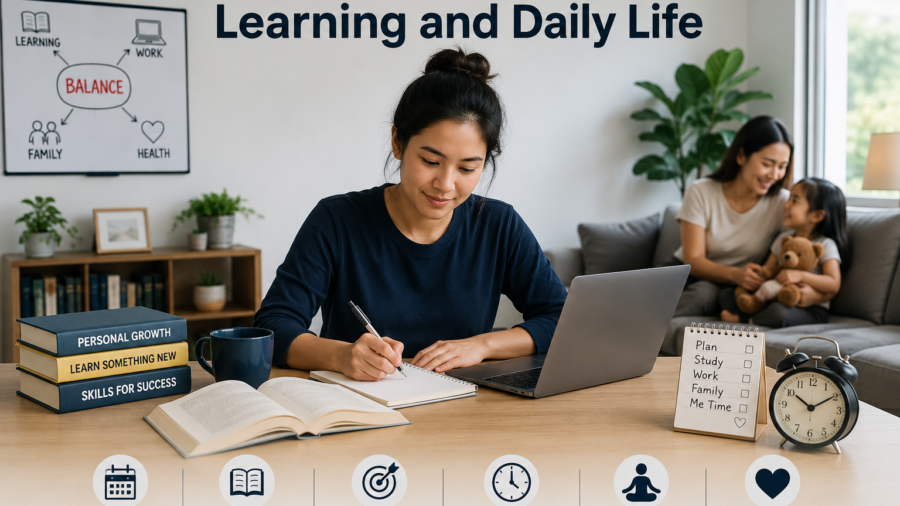
In today’s fast-paced world, finding time to learn while managing work, family, social commitments, and personal responsibilities can feel nearly impossible. Many people start online courses or buy educational books with great enthusiasm, only to discover that daily obligations quickly take over. Yet lifelong learning has become one of the most valuable investments anyone can make, especially in an era where technology, industries, and job requirements evolve constantly.
The good news is that balancing learning and daily life does not require sacrificing your career, relationships, or personal well-being. Instead, it requires a smarter approach that integrates education naturally into your routine. Rather than trying to become a full-time student again, successful learners develop sustainable habits that fit their existing lifestyle.
This guide explores practical strategies to help you learn consistently without feeling overwhelmed. Whether you’re improving your professional skills, learning a new language, studying for certification exams, or simply exploring personal interests, these methods can help you make steady progress while maintaining a healthy work-life balance.
Why Balancing Learning and Life Matters
Many people believe they need large blocks of free time before they can seriously study. Unfortunately, waiting for the “perfect time” often means never starting.
Modern life is busy by design. Between work meetings, commuting, household chores, parenting, exercise, and social responsibilities, uninterrupted hours are rare. Instead of waiting for free time, successful learners create systems that allow education to become part of everyday life.
Balancing learning with daily responsibilities offers several benefits:
- Reduced stress and burnout
- Higher long-term retention
- More consistent progress
- Better mental health
- Sustainable motivation
- Improved work performance
Learning should improve your life—not compete with it.
Understand Your Current Schedule First
Before adding study sessions, evaluate how your time is currently spent.
For one week, track your activities honestly.
Include:
- Working hours
- Commute
- Meals
- Household chores
- Exercise
- Entertainment
- Social media
- Television
- Sleep
Many people discover they spend over two hours each day on activities that provide little long-term value. Even reclaiming thirty minutes daily creates over 180 hours of learning annually.
Small improvements often outperform dramatic schedule changes.
Set Realistic Learning Goals
One major reason people quit learning is unrealistic expectations.
Instead of saying:
“I’ll study three hours every night.”
Try:
“I’ll study for 20 minutes every weekday.”
Consistency beats intensity.
Your goals should be:
- Specific
- Measurable
- Achievable
- Relevant
- Time-based
Examples include:
- Finish one chapter every week.
- Watch two educational videos weekly.
- Practice coding for 25 minutes each day.
- Read ten pages before bed.
Realistic goals create momentum instead of guilt.
Make Learning Part of Existing Habits
Habit stacking is one of the easiest ways to maintain consistency.
Attach learning to activities you already perform every day.
Examples include:
Morning coffee:
- Read one educational article.
Lunch break:
- Watch a short tutorial.
Commute:
- Listen to educational podcasts.
Evening:
- Complete one lesson before watching TV.
Bedtime:
- Review notes for ten minutes.
Instead of creating entirely new routines, improve the ones that already exist.
Prioritize Quality Over Quantity
Many learners believe longer study sessions automatically produce better results.
Research consistently shows that focused attention matters far more than study duration.
Thirty highly concentrated minutes often outperform two distracted hours.
During study sessions:
- Silence notifications.
- Close unnecessary browser tabs.
- Put your phone away.
- Focus on one topic.
- Take short breaks afterward.
Deep focus leads to faster progress.
Learn During Small Time Windows
Busy schedules often contain hidden learning opportunities.
Consider using:
- Waiting rooms
- Public transportation
- Coffee breaks
- Early mornings
- Before meetings
- While cooking
- Exercise walks
Five to fifteen minutes may seem insignificant, but these sessions accumulate over weeks and months.
Microlearning is especially effective for:
- Vocabulary
- Flashcards
- Reading articles
- Watching tutorials
- Reviewing notes
Small moments become meaningful over time.
Protect Your Energy, Not Just Your Time
Many people schedule study sessions during periods when they are mentally exhausted.
Energy management matters just as much as time management.
Identify when you feel most alert.
Some people learn best:
- Early morning
- Mid-morning
- Afternoon
- Evening
Place your most demanding learning activities during your highest-energy hours.
Reserve low-energy periods for easier tasks like reviewing notes or watching instructional videos.
Accept Imperfect Progress
Perfectionism prevents consistency.
Missing one study session does not erase previous progress.
Avoid thinking:
“I missed today, so I’ve failed.”
Instead think:
“I’ll continue tomorrow.”
Successful learners recover quickly instead of quitting completely.
Remember:
Progress is rarely perfectly linear.
Life includes vacations, illness, emergencies, holidays, and unexpected responsibilities.
Flexibility keeps learning sustainable.
Eliminate Common Time Wasters
Modern distractions quietly consume hours every week.
Common examples include:
- Endless social media scrolling
- Excessive streaming
- Constant notifications
- Checking emails repeatedly
- Unnecessary multitasking
Try replacing just thirty minutes of passive screen time with active learning.
The long-term difference can be remarkable.
Use Technology Wisely
Technology can either support learning or destroy focus.
Choose digital tools intentionally.
Helpful options include:
- Note-taking apps
- Flashcard software
- Online courses
- Digital calendars
- Focus timers
- Habit trackers
Avoid downloading dozens of learning apps.
A simple system used consistently always beats a complicated system abandoned after two weeks.
Create a Weekly Learning Plan
Instead of deciding every day what to study, prepare a weekly roadmap.
Example:
Monday
- Read Chapter 3
Tuesday
- Practice exercises
Wednesday
- Watch tutorial videos
Thursday
- Complete assignments
Friday
- Review notes
Saturday
- Practice projects
Sunday
- Reflect and prepare next week
Planning reduces decision fatigue.
Learn Actively Instead of Passively
Reading alone often creates the illusion of learning.
Instead, actively engage with information by:
- Taking notes
- Summarizing concepts
- Teaching someone else
- Solving problems
- Creating projects
- Asking questions
Active learning dramatically improves retention.
Stay Flexible During Busy Seasons
Some weeks will simply be busier.
Instead of stopping completely, reduce your learning load temporarily.
For example:
Normal week:
- 45-minute study sessions
Busy week:
- 10-minute review sessions
Maintaining the habit matters more than maintaining the duration.
Consistency survives flexibility.
Build a Supportive Environment
Your surroundings influence your habits more than motivation alone.
Create an environment that encourages learning.
Ideas include:
- Keep books visible.
- Prepare your workspace.
- Charge devices beforehand.
- Remove distractions.
- Inform family members about study time.
Small environmental improvements reduce friction.
Celebrate Small Wins
Motivation grows through visible progress.
Celebrate achievements like:
- Completing a chapter
- Finishing a course
- Maintaining a study streak
- Passing quizzes
- Building a project
Small rewards reinforce positive habits.
Examples include:
- Watching a favorite movie
- Enjoying a special meal
- Buying a new notebook
- Taking an afternoon off
Positive reinforcement makes consistency easier.
Develop Long-Term Learning Habits
Learning should become part of your identity rather than a temporary project.
Instead of saying:
“I need to study.”
Think:
“I am someone who learns continuously.”
This mindset encourages lasting behavior change.
Developing a Growth Mindset for Adult Learners helps individuals embrace challenges, accept mistakes as opportunities to improve, and remain committed to learning despite setbacks. This perspective transforms education from a stressful obligation into a lifelong journey of personal development.
Find Learning Methods That Fit Your Lifestyle
Not everyone learns best in the same way.
Some people enjoy structured online courses, while others prefer books, podcasts, videos, or hands-on projects. Choosing methods that naturally fit your schedule increases the likelihood that you’ll stay consistent.
For professionals juggling careers and family responsibilities, exploring different Learning Methods for Busy People can make education more accessible. Whether through short daily lessons, weekend deep dives, or audio learning during commutes, selecting the right format allows learning to become a sustainable part of everyday life rather than an additional burden.
Maintain Balance to Avoid Burnout
Learning should enrich your life—not dominate it.
Remember to prioritize:
- Adequate sleep
- Regular exercise
- Healthy meals
- Family time
- Relaxation
- Hobbies
A healthy body supports a healthy mind.
When you care for yourself, learning becomes easier, more enjoyable, and far more effective.
Conclusion
Balancing learning and daily life is not about finding extra hours in an already crowded schedule—it is about making intentional choices with the time and energy you already have. Small, consistent efforts often produce greater long-term results than occasional bursts of intense studying. By setting realistic goals, integrating learning into existing routines, managing your energy wisely, and accepting that progress does not have to be perfect, you can continue growing without sacrificing your well-being.
The most successful lifelong learners are not necessarily those with the most free time, but those who have built sustainable habits that fit naturally into their everyday lives. Whether you dedicate ten minutes or one hour a day, each learning session contributes to your personal and professional growth. Over weeks, months, and years, these small investments compound into valuable knowledge, stronger skills, and greater confidence.
Ultimately, learning should support the life you want to build—not compete with it. When education becomes a balanced, enjoyable part of your routine, you create a foundation for continuous improvement that can benefit every area of your life for years to come.